Showing posts with label PS3. Show all posts

Thursday, July 7, 2011

Review: inFamous 2

Just over two years after it's predecessor, inFamous 2 hit shelves in early June of 2011.  The first inFamous, released in May of 2009, was a great success, blending sand-box style game play with an innovative style of third-person shooter/action and complex moral choices.  For those who didn't play the original inFamous, I will give you a bit of a synopsis.  You play as Cole MacGrath, a bike messenger who was given a mysterious package to deliver.  The package explodes and rather than dying, Cole suddenly exhibits electric powers.  You go through the first game fighting other people with powers (or as the story calls them, conduits) and are given the option to either be good and save Empire city or be evil and conquer it.  In the second game your sole objective is to defeat "The Beast," an ominous and looming figure ever present in the background as you try and increase your power as Cole MacGrath.  The game takes you to a new city, New Marais, quite obviously a replica of New Orleans, so much so that New Marais was recently hit by a hurricane.  As Cole you fight new enemies consisting of three factions: the Militia, the Corrupted (swamp monster type things), and Vermaak 88 soldiers (ice conduits).  You go through the game searching for blast cores which will increase your power and help you to eventually defeat The Beast.

As the story goes, it's solid.  You actually have a motive from the very beginning and a solid of idea what to do.  It isn't straight and linear, however, and there are some significant bumps and twists in the storyline, a few of which were quite unexpected.  The characters are memorable and you will undoubtedly have those that you grow to like and those that you grow to hate.  The only character that didn't have as much impact as I would have liked was Bertrand, the second most threatening antagonist, but without doubt the most present.  Interactions with him are few and far between and when you do confront him, you never really feel an overwhelming sense of dread or danger.  The best character development comes in the form of Cole's sidekick from the first game, Zeke, and a new operative, Lucy Kuo.  For those that played the original, Zeke and Cole had some complications toward the end of the game, and Sucker Punch did not forget about this, successfully carrying both their long friendship and awkward tension into the second game.  Kuo is potentially the most interesting character in the game, in particular because something drastic happens to her, but I'll let you find out what that is for yourself.

Two factors play the largest role in concerns to the game play of inFamous 2: the powers and the moral choices.  The electric powers are just as sharp as they were in the first game.  Firing is accurate and your power choices are varied.  Toward the middle of the game you're even given the choice to add a power: fire or ice.  I chose ice and some of the ice moves were some of my favorites throughout the entire game, especially the ice jump which made traveling and evading even more efficient.  While I had my go to favorites (such as the generic electrical shot and the electric grenade), the game does a good job of making you want to change your favorite power.  At times I found I liked grenades the most, but then I would get an upgrade for my Amp (the games melee equipment) and found myself enjoying hand-to-hand combat more.  Then I would get and upgrade for my grenades and they would quickly become my most used.  Another thing that is great about the game is the upgrade system.  Even though I made it through the entire game and did every single side mission, by the end there were still powers I hadn't unlocked or purchased.  This is in part because I decided to take the good route and there are both good and evil powers, but some of the more expensive upgrades I didn't get a chance to purchase, which only made me want to do a second play through that much more.  The moral choices, unfortunately, aren't as well developed.  While the first game made you decide between sharing a care package of food between a group of hungry survivors or using your powers to keep all of the food for yourself, inFamous 2's choices aren't quite as morally confusing.  One option that is present during the entire game as a side option to gain more positive or negative karma is to chose between stopping a mugging or beating up a group of cops.  The moral decision there is pretty clear and is very cut and dry in terms of which option is good and which option is evil; what inFamous 2 lacks in its moral decisions is a gray area, something the first installment succeeded at.

The graphics in the game are excellent and quite detailed.  The city of New Marais is teeming with life with people running around, street performers lining the streets, and cable cars running through the city.  The buildings also provide a touch of life with colorful, glowing lights, art deco exteriors, and even sunken buildings later in the game.  The AI is also pretty diversified in terms of the way they look and act.  The voices are all relatively distinct and while you will hear an AI say the same thing every now and again, they don't talk every single time you're around them, so it isn't frequent enough to become an annoyance.  Furthermore, while all of the characters are made from the same basic model, none of them look exactly alike, with slight variations such as hats, clothing style, and facial hair.  This just makes the city breath that much more life and seem all the more authentic.  The one downside to the AI is that the citizens are incredibly stupid.  They run everywhere and seem to fall down at the slightest tap.  Citizens carrying blast shards (which you can take from them for negative karma) run away from you screaming, even if you've been proclaimed the "Hero" of New Marais.  Another instance where the AI broke the believability barrier was when I was watching a news report and several of them ran up to the screen holding their heads and screaming, even though the report wasn't about any imminent doom (at least not yet).  The unfriendly AI on the other hand is great with varying sizes of unrelenting enemies.  The small enemies don't take breaks from shooting you and will pump an entire clip into you if you let them, immediately killing you.  This makes the fighting more challenging and makes you up your game when confronted with a swarm of enemies.  The larger enemies aren't frequent enough to become an annoyance, but I found that they sometimes get stuck in particular areas and freeze, making them a sitting duck.  Beyond that, all of the body motions (Cole's especially) are fluid and believable, as are all of the special effects and explosions, and I ran into very little frame rate issues.

One other thing I want to point out is the combat system.  The combat system in inFamous 2 is incredible and is one of the best I have ever played in.  There's a solid balance of shooting and melee which makes the combat more fluid.  In the first game I found myself rarely approaching the enemies and shooting them from a distance while I strafed back and forth dodging their bullets.  In this game I would perch on a building, toss a grenade, jump into the fray, smack a couple of guys around, dodge a couple of enemies, shoot the last remaining few with an electric blast, and proceed to restrain any of the survivors.  While there have been a lot of complaints about the "action camera" during some of the finishing moves interwoven into the melee system (and yes, at times it was a little troublesome with terrible close-ups or crops), it didn't seem like that much of an issue throughout the game.  It's true that I couldn't see enemies that were behind me at times and I couldn't prepare to move left or right away from a thug with a gun, but that kept me on my toes.  After beating the crap out of a guy, I would immediately whip around, perform a back hand spring, and pull up my trusty electric powered hand and be ready to fire. 

inFamous 2 also added a create your own mission system that consists of user generated content, but from what I played of it I wasn't terribly impressed.  There have been some creative missions, but overall it seems like a petty attempt at adding extra re-playability to a game that doesn't necessarily need it.  Another quick side note that may be of concern to some.  While the voice actor of Cole was changed and was a little grating at first, I quickly grew fond of the new voice actor and his slightly smoother voice led to a much greater opportunity for comedic writing within the game.  While the writing in the game isn't superb, the comedic bits are well placed and funny enough to break up the constant action and waves of enemies.

inFamous 2 isn't as striking as the first game, but it manages to grow in areas that inFamous fans should welcome with open arms.  The graphics are crisp and detailed and I saw no evidence of pop-ups and very few frame rate issues.  Cole and his supporting cast make you want to invest in them and they help you decide which path you want to take.  They even provide for a shocking twist at the very end of the game.  While the moral choices aren't as murky as I would have liked, the upgrade system and combat more than make up for it, making for an innovative and fluid fighting style.  The game's story is strong and pointed, but has enough bumps in the road to keep the player guessing and intrigued.  While there are camera issues and the user generated content system is lack luster, the many positives of the game outweigh its negatives.  inFamous 2 is a must for any PS3 owner and fans of the first game are sure to be proud of the second installment.

Friday, August 13, 2010

Heavy Rain

In 2010 so far there have been some highly anticipated titles: Starcraft II, Red Dead Redemption, and God of War III among others.  However, only one game this year has been anticipated because of its dynamic storyline and radically different game play.  Heavy Rain (2010), released as an exclusive titles for the Play Station 3, is a murder mystery game that involves four main characters that the player switches between throughout the story.  The first of these characters is Ethan Mars, a father of two whose life comes tumbling down after a series of unfortunate events; Ethan is the character you will familiarize yourself with the most and is the primary protagonist.  The other three are Madison Paige, a woman suffering from insomnia, Norman Jayden, an FBI agent, and Scott Shelby, a private detective.  All of these characters are tied together by the most important piece of Heavy Rain: the Origami Killer.  Without giving too much away, the Origami Killer is an elusive who has been kidnapping young boys for over three years; every time one is murdered, they are found with no visible wounds, but have been drowned and are also in possession of an origami figurine as well as an orchid. 

The story line of Heavy Rain is absolutely enthralling.  I can easily say, without doubt, it is by far the first game I have absolutely not been able to put down.  It's the only game I have beat in less than two days with over 15 hours of game play.  While it is a murder mystery "game," Heavy Rain seems more like an interactive movie.  There's a lot of dialogue, some well written, some not.  What makes it more intriguing though is how immersive it is.  You feel for Nathan during his turmoil and most of all, when a character is in danger of dying (and believe me, there are more than enough opportunities for them to die), I can honestly say I got frightened and tense.  Some people may not enjoy as much dialogue as is present in Heavy Rain, especially people who are not fans of the RPG genre, but don't take that to mean that there isn't any intense action.

Heavy Rain's game play consists of a system focused on QTE's or quick time events.  What this means is that while playing, the game will flash a button the player has to push.  The player must then push the button within a certain amount of time or some negative consequence occurs.  This system is similar to Guitar Hero games and the like, but is a bit more complex.  For instance, if in a gun fight the player doesn't push square in time, the character might get shot.  Furthermore, the game makes use of Play Station's Six Axis motion controller by making gamers shake, tilt, and rotate the controller in addition to the QTE's.  Heavy Rain also allows the character to move around the world and stumble upon interactive objects.  With FBI agent Norman Jayden, you can interact with clues, finger prints, suspects, etc.  However, the most enticing interactive aspect of Heavy Rain is Jayden's virtual reality system, ARI.  ARI, or Added Reality Interface, by far provided the most "Holy Shit" moments for me of Heavy Rain.  ARI can completely alter Jayden's surroundings or simply provide him with a baseball to toss against a wall.  In order to really understand it, you'll have to play the game.

Heavy Rain's graphics are incredible close-up, especially during loading sequences when you're shown a character's face and the detail is overwhelming.  There are some visual glitches I experienced, such as smoke emanating from a non-existent cigarette, but overall, the graphics were relatively smooth and impressive.  The score for Heavy Rain also sets the mood incredibly well, playing soft melodies for sympathetic moments and heavy orchestral pieces for intense fights or impending doom.  The triggering system for this isn't always accurate though, seeing as how the "impending doom" score started playing while I was warming up a bottle of milk; not exactly the most dramatic of situations.

Overall, while most gamers may not know if they want to play Heavy Rain or not, most feel like it's a game they should probably try.  As a serious skeptic of motion controls and QTE's, I can say that I thoroughly enjoyed Heavy Rain.  While the control system is radically different than what many may be used to, Heavy Rain is a radically different game.  The motion controls at times seem a bit tacked on, but when trying to kick the window out of a sinking car, slamming your controller in a downward motion only feels natural.  The intense story line keeps the player on their toes with every QTE.  If you're not quick enough, one of the main characters could be dead for the rest of the game.  With various possibilities to every chapter of the game, Heavy Rain has several different plot lines as well as endings.  Because of this, the replay value is incredibly high making every gamer want to play through at least twice.  You may still be skeptical of Heavy Rain, what with its long winded dialogue, QTE's, and motion controls, but if I've convinced you of anything, let it be the story.  Heavy Rain, out of any game I've ever played, has the most intriguing and interesting storyline I've ever experienced, making you care deeply about every character throughout the game.  Heavy Rain has some of the most dramatic, intense, and nerve wracking scenes I have ever witnessed and you should play it.

Monday, July 26, 2010

Killzone 2

Released in February of 2009, Killzone 2 was meant to be the "Halo" of the Play Station 3.  The first Killzone (2004) was originally released to compete directly with the first Halo game, Halo: Combat Evolved, but fell incredibly short and didn't amount to the level of success Halo had, let alone to a very good game in general.  Killzone 2, however, was released on the Play Station 3, a system that meant worlds for the competitor of the Halo franchise.  With a three year gap in between the first and second game, designers, developers, and the like had plenty of time to improve upon what was lacking in the original Killzone.  It suffices to say that Killzone 2 more than exceeds its predecessor and is a worthy competitor not only for the Halo franchise, but likely for the Call of Duty multi-console franchise.

In Killzone 2, you're placed into the game as Sev, a veteran member of the ISA, in a special forces unit known as Legion.  Along side you are several other characters that seemingly are important, but throughout the game, you don't care much about them, so I'm not going to bother naming them.  Legion is placed on Vekta, the home planet of the Helghast, the enemy that invaded earth in the first installment of Killzone.  Now taking the fight to the Helghast's front door, your mission is fairly straight forward: capture the Helghast leader, Emperor Visari.  While the characters aren't incredibly memorable like in other games (*cough* Bad Company *cough*) you still manage to remember where they fit into the story and why they're important, more so in the latter half of the game rather than the first.  The plot isn't entirely complicated and is a little mottled, but is easy enough to follow and understand what your primary objectives are.  In the end, one doesn't necessarily play Killzone 2 for the incredible story line.

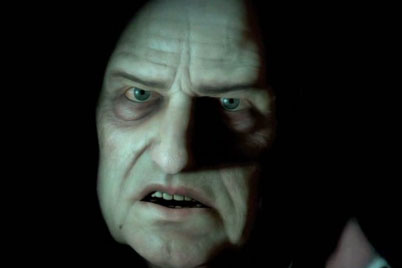
The gameplay in Killzone 2 is relatively smooth.  Enemies don't flood you an unnecessary amount, but if you do stay in cover for too long, they will stab you.  Friendly AI tends to be a little stupid, providing you with little to no cover or walking away to the next check point and waiting for you while you're still under fire.  As I said, while all of the people in the Legion squad aren't just jar heads, you'll definitely end up treating them that way seeing as how you easily can complete the game without them.  Dialogue amongst characters in the game both in cut scenes and in-game aren't too exciting either.  Emotions between characters seem forced and even when one of your squad mates dies, while you may feel a tinge of regret, your character's emotions seem a bit painted on.  The one character that does manage to stand out in the game, however, is Emperor Visari.  As an ominous, looming figure, Visari's voice is ever-present throughout the war zone, whether it be far off in the form of a wide spread warning or a radio placed on the ground.  Furthermore, out of all of the enemies you face, he's the only one whose entire face you see and one of only two enemies whose eyes you see.  This being said, Visari stands out among the crowd and some of the speeches and monologues that come from his character are incredibly well written and powerful.  I will say, that while the story of Killzone 2 isn't very strong, it does have an unexpectedly powerful ending.

The controls for Killzone 2 are a bit infuriating at the begging.  This could be in part because I'm used to a 360 controller when I'm playing a shooter, but it is also due to the fact that the control layout is counter intuitive, at least to today's standards.  Where in most contemporary shooters, the left trigger is aim and the right is fire, in Killzone 2, there is no configuration that gives you those controls.  There is absolutely no way to make L2 aim and R2 fire.  The closest you can get is to have L1 as aim and R1 as fire, but that configuration is just as counter intuitive.  What I ended up settling with was using R2 as fire, L2 as grenade, and a click of the right joystick (R3) as aim.  While this took some getting used to, by the time I finished that game, I had gotten pretty well adjusted to it.  Another controls issue is the running; while its placed where one would think (as a click of the left joystick [L3]), you don't stop running once you let off.  If you try to stop and aim, you'll run right past your enemies and get stabbed; if you try to run up to cover, but don't click L3 again, you get stabbed.  Motion controls are also tacked on when you need to set a mine or turn a valve.  By rotating your controller, your character twists a valve; sort of useless in my opinion.  One thing that stands out among the controls, however, is the cover system.  By holding L1, I could get into cover, stay there, and with a simple push of the left joystick, I could lean over, lean to the right, or lean to the left to get a better shot at my enemies.  When I let off of the joystick, I would immediately drop back into cover. 

If anything though, there are two primary reasons to play Killzone 2: the multiplayer and the graphics.  The multiplayer in Killzone 2 is what one would expect: it has your standard kill everything games; your capture the object games; your protect this dude because I said so games, etc.  What is different about Killzone 2, however, is that you can play all of these games together in one huge match.  Once one team wins one mission, it switches to the next without going to a lobby or anything of the sort.  For instance, your first mission will be to get a collective total of fifty kills.  Once one team has achieved that, they get a point, and the next mission pops up: defend the objective, so on and so forth.  For each mission that a team wins, they get a point.  In every game I played it was a best of seven style, which provides for long matches with incredibly varied gameplay.  Two things, however, hurt Killzone's online.  The first of these is its connectivity issues; when I went online for the first time, I couldn't connect at all.  Searching online for a solution for almost an hour, I found hundreds upon hundreds of people with the same issue.  Luckily, I came across someone who said to disable the UPnP, which ,surprisingly, worked.  The second thing is the community, which is on par with the Halo community.  Not only is in-game chatter annoying and obnoxiously loud, but being able to mute someone isn't nearly as fluid as in Halo.  Even worse is tea bagging.  For anyone who hasn't played Halo with me, tea bagging is just what it is in the real world; its when you kill an enemy and then while they're re-spawning with a clear view of their dead body, you stand over them and dip your crotch right into their face.  Tea bagging has been taken to a new extreme in Killzone 2.  When you die in Killzone 2, you can "bleed out" and lay on the ground, gasping for air until you decide to re-spawn, someone revives you, or someone kills you.  On several occasions, I was crawling on the ground, waiting to respawn, only to have the guy that had killed me tea bag me for ten seconds and then pop me in the head right before I was about to re-spawn.

With tea bagging aside, the graphics of Killzone 2 are by far some of the best I have ever seen.  Everything in the game seems incredibly fluid and life like.  Textures on all of the guns are incredibly detailed, human characters look exceptional and, oddly enough, almost life-like when their eyes are closed.  The environments are vast and expansive and seem to take a bit of influence from the grand landscaping designs seen in Gears of War.  The environments are incredibly moody and dark, with bits of ash and fire flickering through the sky.  Lighting is also astoundingly well done, setting the mood for every environments you find yourself in, whether it be a desert or an underground passageway.  Body movements of enemies are incredibly fluid, but not so much so that they have that rag doll effect once they're dead.  All of the movements in the game, such as running and reloading, are incredibly smooth and life-like, and carry the weight that would seem necessary for such actions. In the end, Killzone 2's graphics top many that I have ever seen, managing to create vast environments that span miles, while still defining fine details such as stitching and hair.

Before I close I would like to mention a couple of other quick points.  The guns in Killzone 2 are fairly limited and the good guns don't start to make an appearance until almost over half way though the campaign.  Boss fights are pretty fun, but can be a little easy, save for the very last one.  The Helghast enemies, while there are fifteen different types of them, all look similar enough that its hard to really distinguish which is which, something that is unfortunate because, upon closer inspection, many of them have unique looks.

Overall, Killzone 2 is an incredible game that any PS3 owner should at least play.  The game play is fun and can mold to first time gamers as well as veteran shooters.  The story, while a little weak throughout, manages to end incredibly well, really creating anticipation as to what will happen next.  The multiplayer, while it has its faults and the community is unbearable, once you get on a roll and play for a while, it is a lot of fun.  The graphics for Killzone 2 are beyond amazing and I could just sit and look at my screen for hours in awe.  Now that I've played catch-up with one of the major PS3 titles, I can finally start anticipating Killzone 3, which will be released on February 28th, 2011, and will be in 3D!  Lets hope that works out.

Tuesday, July 6, 2010

Battlefield: Bad Company

"Capitalist pigs, very nice"
Battlefield: Bad Company, released in 2008 by EA DICE, is a first-person shooter (FPS) that places you as a soldier, Private Preston Marlowe, as the fresh meant to a squad called Bad Company.  First off, let me say, thank you for finally making a war FPS with lovable characters, a solid story line, and a main character that you actually feel connected to.  Now, don't get me wrong, in the Call of Duty: Modern Warfare franchise, there's a solid story.  However, the story gets complicated and a little muddy, especially in the second one.  Not to mention that you could give two shits about whether or not your character dies.  In BF: BC, you genuinely care about the character you play as.  Not only that, but you probably care more about your three squad mates: Sweetwater, Haggard, and Sarge.  Because of this unique cast of characters, each has a distinct personality, which makes the dialogue great as well.  One of the first examples of this is a cut scene early on in the game that causes you to pass out.  While looking at a black screen, you hear this: Haggard: Oh look. New guy's dead. Sweetwater: Already? I was just about to learn his name. Haggard: I think it was probably Joe. Usually is. Sarge: His name's Preston. Preston Marlowe. And he's not dead. Right, soldier?  Later on in the game, you get separated from your squad and have to figure out what their location is.  Without them, the entire mission feels incredibly lonely, especially without Haggard yammering on about who would win in a fight: Truckasaurus or a tank.  One of my favorite conversations goes as follows: Sweetwater: Sarge, Haggard's running away again! Sarge: Hold on, something ain't right. Sweetwater: I know, look at him, he runs like a girl. Sarge: No, not that.  I'm talking about something else.

The story places you in Bad Company in Eastern Europe to do some final missions before Sarge retires.  After your first mission, you stumble upon a solid gold bar the was smuggled by the mercenaries you have been fighting.  Haggard, being the maniac he is, instantly gets gold fever and starts firing his gun in the air in a neutral zone looking for the gold.  After you manage to get him back, the army informs you that they've dropped you and you will not be able to be extracted.  With this news, Sarge decides that Bad Company may as well go AWOL and search for the gold.  The rest of the story bats you back and forth between working for the army and trying to find the gold.  Outside of the single player campaign, although I have yet to play it in the first one, the multi-player is incredibly fun with large scale maps and several enemies, as is common to the Battlefield name.

The controls for the game are a little different from what a lot of people are used to, such as melee attacks with the knife being switched to the Y button and switching weapons being changed to the right bumper.  However, basic controls such as firing and aiming being placed to the right and left triggers respectively remain the same.  There's a vast assortment of weapons that can be found throughout the game and are considered "Collectibles;" finding  five, 50%, and 100% of them will each earn you an achievement.  One downside to the weapon system is that you are forced to swap out both your primary and secondary weapon upon switching weapons.  Most assault rifles will come with a secondary of a grenade launcher and snipers will come with a pistol.  I typically like to keep a sniper on me and an assault rifle if I can, however, in BF: BC, this isn't an option.  They manage to make up for it a bit with giving you special items, or gadgets, such as the MRTR-5, a GPS transmitter which can lock onto any area, enemy or otherwise, within a certain range and send a barrage of missiles to that location.  This is incredibly useful, but makes certain parts of the game a little too easy, even on hard.  

However, while playing through the game, I was incredibly grateful to have it because of the artificial intelligence (AI).  The AI seems to be either incredibly stupid or the best soldier that has ever lived.  Some enemy soldiers will be standing right on top of you and do nothing, whereas others, especially tanks, will be able to spot you among trees from a mile away and pick you off no problem (making a stealth approach to the game nearly impossible).  This is especially infurating if you have a long ways to go until your next save point.  If you die, you re-spawn at your last save area, which is useful if you're put right outside of the action, however, other times it will put you miles away from the enemies without a vehicle. Other times, the save points will literally spawn you side-by-side with an enemy, which can be easily frustrating seeing as how half the time enemies are much quicker with their instant kill knife attacks than you are.

The graphics of BF: BC aren't incredible with today's standards, but are still pretty impressive.  The whole game seems to be in sort of a grainy film, giving everything a very rough texture, which is distracting at first, but eventually you get used to it.  Human models look relatively accurate, although the facial features, especially the eyes, seem a bit odd.  However, with your character from the FPS perspective, everything seems spot on.  Grenade throws are heavy, it takes an effort to reload, and when swimming, you can see your hands stroking the water in front of you.  One innovation that helped BF: BC tremendously graphically is their destructive environments.  Nearly everything in the game can be knocked down, save for basic structures of buildings, rocks, etc.  Entire houses can be blown through, forests can be demolished, and even the ground you walk or drive on can have giant craters blown into by a tank that is trying to hit you.  This aspect, while incredibly realistic, is also incredibly fun.  Several times I would know an enemy was in a building, but instead of risking going through the front door and him having the upper hand, I just took my grenade launcher and blew a hole in the wall (Click on the image on the left for a better look at what I'm talking about).  

With all the destruction around you, the sound is also incredibly well done, further emphasizing the war time feel.  Everything sounds incredibly realistic from the shuffling of your boots to trees falling over; from enemies shouting out to their comrades to a nearby gas tank exploding behind you.  This game truly benefits from a surround sound system and really makes me happy that I shelled out to get a good one.  Not to mention that the soundtrack of the game is a lot of fun and manages to keep a light hearted feel to the game, even though you may be at the brink of possible destruction.

Here's the theme song to the game.  Swanky, huh?

Battlefield: Bad Company, although a couple of years old, is an incredibly satisfying game.  In fact, I bought the second, released this past March, before I bought the first.  After playing it a bit, I realized that the story was good and I should buy the first one.  Luckily, I found it for only $10 at a Blockbuster that was closing.  I have to say it was one of the better game purchases I have ever made.  Going through on hard right now I have already spent about ten hours playing and just got to the final mission of the game.  While there were a few visual glitches, such as things flying high into the sky and my squad mates essentially flying to a vehicle from yards away, most of them were minor.  The real problem in BF: BC is the AI.  However, this problem is overshadowed by the incredible sound, the great cast and storyline, as well as the superbly executed destructive environments.